


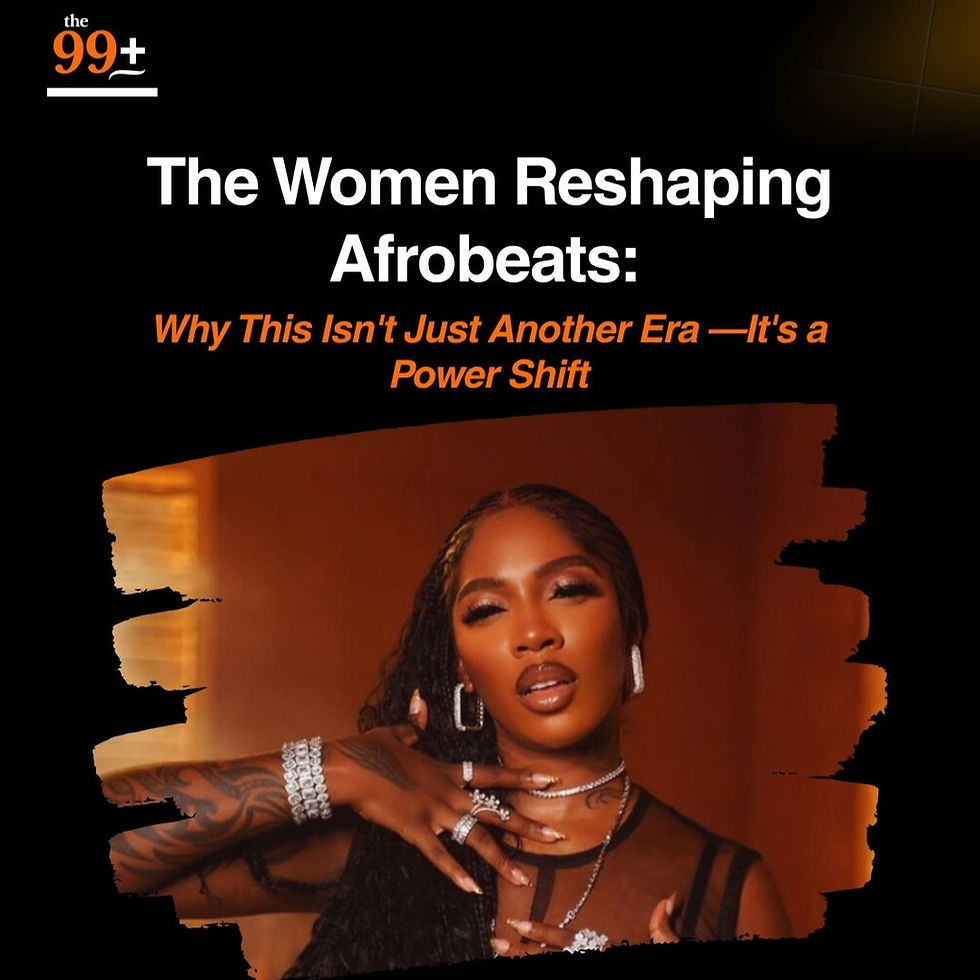
Why Tyla Signals a New Era Beyond Western Validation: The Afrobeats Global Shift

For a long time, Afrobeats had a clear question it was trying to answer:
How do we go global?
Now, that question feels outdated.
Because something has quietly changed — not in headlines, not in announcements, but in behavior.
In how artists are releasing.
In what’s connecting.
In what’s no longer working.
And right now, Tyla isn’t leading that shift.
She’s confirming it.
What we’re witnessing isn’t a moment — it’s an Afrobeats global shift that’s been building quietly beneath the surface.

The Afrobeats Global Shift Is Already Happening — And Most People Missed It — The Industry Got the Formula Wrong
Let’s be honest about something the industry doesn’t like to admit:
Afrobeats didn’t go global because it tried to.
It went global despite the attempts to engineer it.
For years, the dominant playbook looked like this:
Get a Western feature
Adjust the sound slightly
Secure playlist support
Push for crossover visibility
That model defined the era of Wizkid, Burna Boy, and Davido — or at least, that’s how the industry chose to interpret their success.
But here’s the uncomfortable truth:
That wasn’t the reason they broke through.
It was just the part that was easiest to copy.
What Actually Worked (And Why It’s Being Misread)
Take Wizkid crossing 10 billion Spotify streams.
That number doesn’t come from chasing moments.
It comes from catalog gravity.
It comes from:
Consistency over time
Cultural clarity
Music that travels because it’s rooted, not because it’s adjusted
“Essence” didn’t feel like a global attempt.
It felt like a local truth that refused to stay local.
And that’s the part the industry misunderstood.
Instead of asking why it connected, it asked:
“How do we recreate it?”
So the formula got flattened.
And eventually… diluted.
The “Global Slowdown” Narrative Is Lazy
Now people are saying Afrobeats is slowing down globally.
Fewer breakout hits.
Less dominance.
Less noise.
But that interpretation is surface-level.
What’s actually happening is simpler — and more disruptive:
The shortcut stopped working.
The industry built a system around replication:
Repeat the sound
Repeat the collaborations
Repeat the rollout structure
But culture doesn’t scale like that.
And audiences caught on.
So this isn’t a decline.
It’s a rejection.
Tyla’s Rollout Isn’t Strategy — It’s Awareness
This is where Tyla enters the conversation — not as a pioneer of something new, but as an artist who clearly understands what’s already changed.
Her APOP rollout doesn’t feel like it’s trying to convince anyone.
It feels like it already knows.
“A*POP” isn’t branding fluff.
It’s a declaration:
The sound doesn’t need to be translated anymore.
That’s the difference.
Previous eras tried to position African music for the world.
This era is starting to position the world around African music.
This Shift Is Bigger Than Tyla
If this was just about one artist, it wouldn’t matter.
But the signals are stacking:
More artists are leaning into identity-first releases
Fewer records are built around obvious crossover formulas
Local sounds are being preserved instead of polished out
Audiences are rewarding authenticity over accessibility
You can hear it in the music.
You can see it in how songs travel without heavy Western co-signs.
You can feel it in how culture is moving ahead of the industry, not behind it.
Tyla isn’t an exception.
She’s a symptom.
The Real Divide: Validation vs Definition
This is where the tension actually lives.
The first global wave of Afrobeats was driven by validation.
Being seen
Being accepted
Being recognized
And it worked. It opened doors that didn’t exist before.
But this next phase is driven by something else entirely:Definition.
Who are we without external approval?
What does the sound look like when it isn’t adjusted?
What happens when identity becomes the strategy?
That’s a harder question.
But it’s also a more powerful one.
The Industry Is Behind the Artists Now
Here’s the twist most people aren’t paying attention to:
Artists have already moved on.
It’s the industry that’s catching up.
Labels are still chasing crossover moments.
Executives are still looking for “the next global hit.”
But artists are starting to operate differently:
Building from core audience outward
Prioritizing sound identity over playlist compatibility
Treating global reach as a byproduct, not a goal
That gap is where the friction is coming from.
And it’s only going to widen.
So What Does “Global” Even Mean Now?
This is the question nobody has fully answered yet.
Because the old definition is breaking down:
It’s not just Billboard
It’s not just Western co-signs
It’s not just visibility
The new version of global looks less like expansion…
…and more like impact without compromise.
Music that moves across borders without changing its center.
That’s harder to manufacture.
Which is exactly why it works.
Afrobeats Isn’t Slowing Down — It’s Outgrowing the Version You Understood
This is the part that will make some people uncomfortable:
Afrobeats didn’t lose momentum.
It outgrew the system that tried to define it.
The world learned how to consume it.
Now it’s being forced to learn how to follow it.
And that shift won’t always look explosive.
It won’t always look like charts.
Sometimes, it will look quieter.
More controlled.
More intentional.
But make no mistake — it’s deeper.
The Bottom Line
Tyla isn’t chasing global success.
She’s operating in a reality where global success is no longer something to chase.
And if this moment continues, then the next phase of Afrobeats won’t be about going further.
It’ll be about going truer.
Because the real power move isn’t reaching the world.
It’s making the world adjust to you.


Comments