


From Grief to Groove: How Afrobeats Reclaimed Papaoutai

There’s a quiet irony unfolding on dancefloors and timelines right now.
A song born from absence — from a child asking where his father went — is being danced to with smiles, body rolls, and open joy.
Papaoutai was never meant to be light. And yet, through Afrobeats, it has found new life as an anthem.
This isn’t confusion. It’s culture at work.
Afrobeats didn’t stumble into Papaoutai.
It recognized something familiar in it: pain that needed movement.
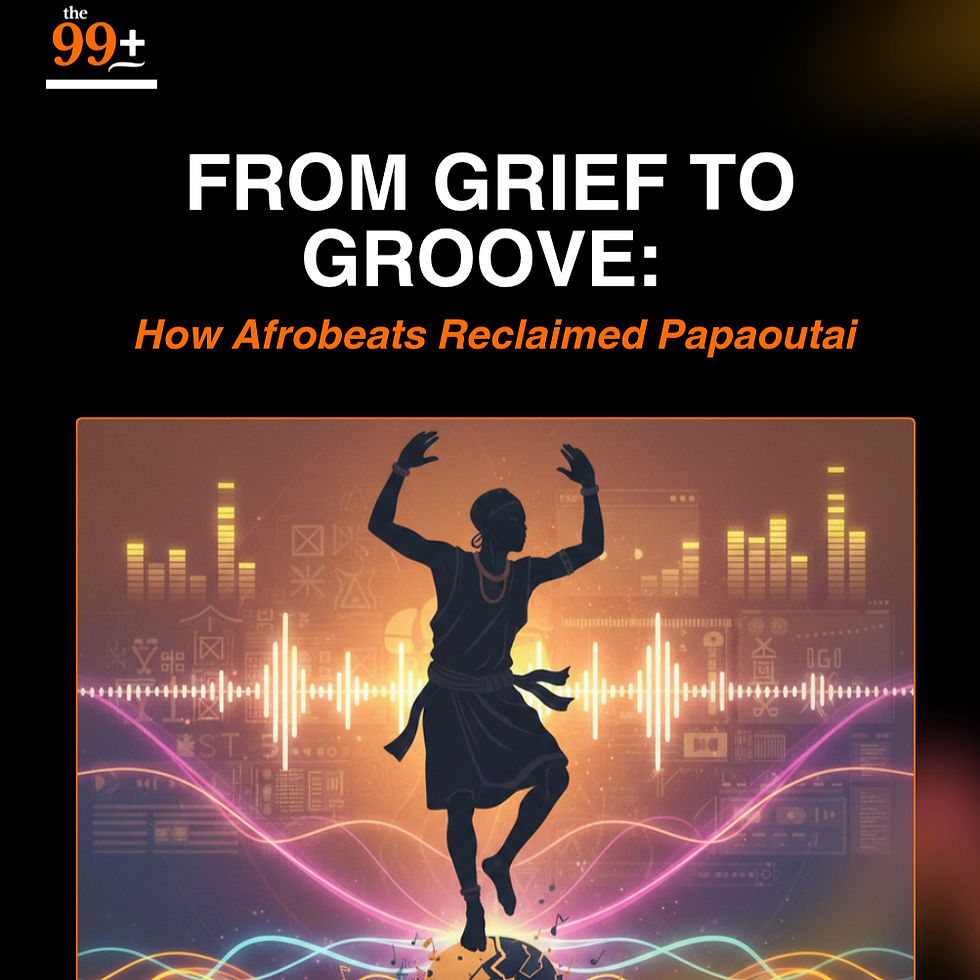
Afrobeats Has Never Been Afraid of Heavy Feelings
African music has never insisted that sorrow must sit still.
From heartbreak songs that fill clubs, to records about hunger, struggle, and loss that still make people dance, Afrobeats has always treated rhythm as a form of release.
Pain, in this context, isn’t something to be hidden or whispered about.
It’s something to be carried together.
So when Papaoutai enters an Afrobeats framework, its meaning doesn’t disappear.
It shifts.
The grief doesn’t evaporate — it becomes communal.
The question isn’t silenced; it’s sung, looped, danced through.
Why Joy and Trauma Are Not Opposites Here: Papaoutai Afrobeats Meaning
In many African spaces, joy and trauma are not separated by walls.
They sit in the same room.
A wake can turn into laughter.
A hardship story can end in a joke.
Music becomes the bridge that allows both truths to exist at once.
That’s why dancing to a sad song doesn’t feel disrespectful. It feels honest.
The Afrobeat-infused versions of Papaoutai don’t mock its pain.
They give it legs.
They allow listeners to feel something heavy without being crushed by it. Movement becomes survival.
Rhythm Carries What Language Cannot
For many engaging with the song now, French isn’t the point.
The ache travels before the words do.
The repetition, the melody, the groove — these things communicate emotion long before translation arrives.
Afrobeats understands this instinctively. Rhythm does the emotional labor.
It carries feeling across borders, across languages, across histories.
That’s why the song works even when its backstory isn’t fully known.
The body understands before the mind does.
Recontextualization Is Not Dilution
There’s a tendency to treat global reinterpretation as loss — as though meaning thins out once a song travels.
But Afrobeats doesn’t flatten Papaoutai. It reframes it.
In its new context, the song becomes less about one man’s absence and more about a shared emotional experience.
Longing.
Questions without answers.
The quiet spaces many people grew up with but rarely named.
Afrobeats doesn’t erase origin stories. It absorbs them and speaks back.
What This Moment Really Says
This moment says something deeper about African emotional intelligence.
About the refusal to let pain define the end of the story.
About the insistence that even grief deserves rhythm, community, and light.
Afrobeats didn’t misunderstand Papaoutai. It reclaimed it.
And in doing so, it reminded the world that for Africans, healing doesn’t always come from sitting with pain quietly.
Sometimes, it comes from letting it move.


Comments